BlogLovin' Teachers Pay Teachers Email Pinterest Facebook Image Map

Monday, May 4, 2015

Teacher Appreciation Week

This week, I am thinking about some of the teachers who made a huge impact on my life.

My kindergarten, first, and second grade teachers taught me both the skill and the love of reading.

Mrs. Anderson, my third grade teacher, would stand on a desk to keep the class engaged.

Mr. Spurlock, my sixth grade teacher and my first male teacher, praised my handwriting and caused me the endless embarrassment of being named the "Teacher's Pet."  But I always took pride in writing neatly after that.

Mrs. Kakouris, the drama teacher, helped a shy sixth grader, who was new to the school, feel confident enough to sing and act onstage.

Mrs. Manning, my junior high chorus teacher, made me feel like I was not only talented, but that I was a part of something very special.

Mrs. B. and Ms. Perry, my High School drama teachers, made me dare to dream of a life on stage. Perhaps it wasn't Broadway in the end, but, trust me, I perform everyday!

The incredible Mrs. Napoli, my twelfth grade Humanities teacher, inspired my lifelong love of art, drama, music, and history.

My professors at the University of Florida gave me a firm foundation in education and child development, providing excellent preparation for my life in the classroom.

These are just a few of the wonderful teachers who have had an impact on my life.  I feel them with me whenever I am in front of a classroom.  I hear their words, their kindness, their passion, whenever I am trying to get through a difficult lesson or help a child understand a difficult concept.

These are just a few of the teachers who have influenced me during my time as a student.

As a teacher, I have been blessed to be surrounded by wonderful educators.  These teachers touch my life every day. They encourage me. They inspire me.  They provide a daily reminder of why I became a teacher in the first place.  So, I'll end this tribute by saying a huge "Thank You" to all of the teachers who do the difficult work of educating our future everyday.  THANK YOU ALL


I hope you all have a happy Teacher Appreciation Week!

Sunday, April 26, 2015

Five Chapter Book Read-Alouds My Students Loved

As the school year begins to run down, I am already beginning to think about next year.  I'm a big believer in "notes for next year."  I want to keep the things that are working well, but change those that aren't.  So, I asked my students to rate and review the chapter books we've read this year. Some of them weren't very memorable and some kids didn't even remember that we read them. I won't be reading those again. The others received a variety of ratings and some mixed reviews. I've compiled the results and here is a countdown to our very favorite book. I've included a link to the Amazon page.

Disclaimer- this post contains affiliate links which means that I earn a small amount when you make purchases (at no extra cost to you). However, my promise to you is that I am only sharing my honest opinions and I will never promote something I do not believe in.


5.  Horrible Harry in Room 2-B by Suzy Kline


Since I teach second grade, I chose this first Horrible Harry book as my second chapter book read-aloud of the year.  My students related easily to the characters, who are also in second grade.  They were quickly engaged in the story of Horrible Harry as narrated by his best friend, Doug.  Like Doug, my students couldn't wait to find out what "horrible" thing Harry would do next. The book is light, humorous, and realistic.  My kids loved it!


https://amzn.to/2JdaCIp

This was our first chapter book read-aloud of the year. My kids instantly related to Keena and how her small mistake led to a big lie. My students quickly made connections between Keena and  Junie B. from Barbara Park's wonderful series of books about a kindergartner and first grader. They enjoyed Keena's capacity for trouble as well as the warm realistic feel of her family relationships. Keena lives with her mother and brother in Washington, DC, but looks forward to time spent with her father in Maryland.  She also enjoys a close friendship with her friend Eric, whose placement in another class leads to even more misunderstandings. This was a fun, humorous read-aloud and a great way to start off the year.


This book received a rating of 4 to 5 stars from several students.  It had just enough mystery and humor to keep my students engaged and eagerly awaiting the next chapter.  They worried about the fate of poor Hermie and loved the outcome.  After we read this, many of my students became avid Jigsaw Jones fans.

2. Snoop Troop: It Came From Beneath the Playground by Kirk Scroggs


Honestly, this was not among my favorites. I have a feeling that this graphic novel made the list simply because it is the most recent chapter book we've read.  However, many of my kids simply loved it.  One student gave it 5 stars and said it "had a lot of funny chapters and the book was cool."  Another boy said it was his favorite because of the "robotic mole."  One of my girls said "it was funny and 'mustereest' (mysterious)." All of the kids agreed that it was a very funny book. The humor definitely appealed to a second grade audience.

And in a landslide vote, this was our absolute favorite chapter book this year:


 1. Because of Winn-Dixie by Kate DiCamillo


"...it's so nice and cheerful." "Opal and Winn-Dixie are a great team..."
"...because Opal loved Winn-Dixie and because Winn-Dixie is funny."
"It was lovely! It is funny, sad, and lovely! It was full of love!"
"Love it!"
"There was a dog in the book."
"...the beginning is funny."
"...very, very good and similar to the movie."
"...because I get deep in the story."

These are some of the comments my students made when I asked them to tell me why they liked Because of Winn-Dixie best.  If you've never read it, let me tell you that it is the best kind of realistic fiction.  The main character, India Opal Buloni, narrates the story of how a chance encounter with a stray dog in a grocery store changes her life.  The overarching themes of the story are acceptance and friendship.  Parts of it will make you cry and parts will make your class roar with laughter.  Not only is this the favorite book chosen by my class, it's been my favorite read aloud for years!

I hope you find this list helpful. Please share some of your favorite chapter book read-alouds in the comments below.

Until next time,

Tuesday, March 10, 2015

How To Survive a Difficult Class


I was talking with some colleagues in the hall about some of our more challenging classes. One of the teachers brought up the class I had last year. She told me she didn't know how I survived it and continued teaching. I thought I'd share some of the lessons I learned during and since that difficult year.

Let me tell you a bit about that class. First Grade.  A VERY young first grade.  Lots of... well, let's just say they were a very energetic group with many behavioral challenges. We had difficulties with getting along. There were some aggressive incidents, but there was also bickering, tattling, name-calling, etc.on a fairly regular basis.  We had problems with stealing.  Classroom items, student snacks, and money went missing on multiple occasions. On top of that, the students as a group were academically low.  Some were not classified as ESL, but it was quite obvious that Spanish was the only language spoken at home.  All of this was complicated by the fact that I had just started at the school in a new district and new grade level.  I had my own learning curve to negotiate. In my 17 years of teaching, I had had only one other year as challenging as this.

Mind you, I consider myself to have pretty strong classroom management skills.  I tend towards a positive discipline philosophy. I've studied Harry Wong's First Days of School. I've attended CHAMPS and Positive Behavior Intervention System (PBIS) training. I've implemented the strategies I learned in my classrooms for years.  I pulled out every strategy I had in my bag of tricks. We had class meetings. Lots of class meetings.  We role-played. I read aloud books that teach social skills. We practiced procedures. I taught and retaught problem-solving strategies. I implemented rewards and consequences.  I made changes to the classroom environment. We had more class meetings. And on, and on, and on.  It was absolutely exhausting. And disheartening.

So, how did I survive with my love of teaching intact? Here are a few things that helped me.


The class may be driving you crazy, but you cannot take your frustration out on the children.  If you do,it usually backfires anyway, as the behaviors then get worse. You can't let the group problems affect your relationships with individual children.  Build those the best you can.  Get to know each child the best you can. Greet each child with a smile every day.  If you're working with a child, try your best to reach and teach that one child.  You can empathize with the child's problems, but you don't let the problems become an excuse for bad behavior or low achievement.  You try your best to help the child in front of you. You may not reach that child today, but there is always tomorrow.


Complaining doesn't help. It offers no insight or solutions. So don't. Stay away from the teacher's lounge. It's the place where complaining lives. Don't hang out with the teachers who are constantly upset with something about their class, the school, the parents. Seek out positive people. Try to focus on what is working. Small things mean even more in a tough year.  Celebrate when a child moves a reading level or gets a math concept. Make sure you notice (and praise) when the child with poor impulse control actually does the right thing.  Read and reread the "happy notes" you get from the kids. Smile. Even when you feel like crying... smile.


You don't have to do it alone. Ask your administration to help you with a behavior plan for the most high-need children.  Sometimes, you may need to have a child removed from the classroom. If that happens, it's best to have a plan in place and the lines of communication open. If you don't have a supportive administration, find a fellow teacher who can partner with you for those difficult situations. Sometimes, it's better for the child if he/she can have a safe place to go away from the classroom.  Sometimes, it's better for your sanity if you can send the child someplace so you can have a break. Ask trusted colleagues for their classroom management advice. Find out what tricks they use for smooth transitions.  Ask for new ideas for attention signals.  If you need classroom management help, ask to observe a colleague or two.  Write down any ideas that might help.


Use email, phone calls, and notes to keep parents up to date on class information.  Communicate as much as possible. Make it clear that you are concerned about and care for every child in your classroom. Make more positive calls than negative ones.  That will help make parents your ally in their child's education. When you only call or write for bad behavior, parents begin to resent you. They are more likely to accuse you of picking on their child or treating him/her unfairly. If you also call or email with good news, they are more likely to help when there is a concern. Listen to parents' concerns.  Do what you can to accommodate requests (such as conference appointments, extra homework, or weekly reports). Enlist and welcome parent volunteers. Believe me, you will need the extra help.


Because your class is a difficult one, it's going to intensify the feelings that you are never caught up, that there is always more to do, that there is never enough time.  In a year like this, more than any other, you have to set limits.  Whether you choose to work late only three nights a week instead of all five; or you decide to leave when the kids leave on Fridays; or you leave the bagful of work at school over the weekend;  you need to make time for yourself. You cannot work 24/7.  If you try, you'll be exhausted, you'll ruin your health,... and you still won't be caught up.  So, get enough sleep.  Eat healthy foods.  Take your vitamins. Take a mental health day, if you need to. And above all, take some time for yourself to rest and recover and get ready for the next day, the next week, the rest of the year.


Trust yourself. Trust what you know. Trust your colleagues.  Try something new. Try something again. Have another class meeting. Try another attention signal. Try another approach. Practice coming to the carpet for the 50th time this year. Remember, they are children. Today may have been a bad day, but tomorrow is not here yet. You are making a difference.

If all else fails, remember you will get a new class next year.  You'll make better decisions as a result of what you learned from this class.  Last year's class was my inspiration for my Kind and Caring Classroom poems.  I've used them this year and they've helped me to build a much better classroom community with my current class.  If you think they might help you, they are available in my TPT store.


I hope this helps. Please share any thoughts or advice you might have in the comments.

Until next time,


Sunday, February 22, 2015

STEAM: Fun with Bubbles

Last week our school celebrated STEAM (Science, Technology, Engineering, Art, Mathematics) Night.  We had a great turnout. Families visited the book fair, enjoyed Chick-Fil-A dinners, wandered throughout the school to inspect Science Fair projects, and explored our First Grade Turtle Museum in the Art room.  That's right, our first graders created adorable clay turtles with our wonderful art teacher, Mrs. Rutherford.


Every first and second grade class had to create a science fair project.  Our class had recently read Pop! A Book About Bubbles by Kimberly Brubaker Bradley, so we decided we wanted to do an experiment that involved bubbles. I found this great science project idea called Bubble-ology on Science Buddies.

My kids were so excited!  That's what I love about STEM or STEAM - students are naturally curious about the world, so investigations such as this are naturally engaging.  The minute I say we will be exploring an idea or conducting an experiment, my students are ready to learn!  That begs the question: why don't we include more science and real-world activities in our normal school day? That's a subject for another post, perhaps.

First, we reviewed what we knew about bubbles. We talked about how water alone would not make a long-lasting bubble. We shared our own experiences with blowing bubbles.  Then I shared with students that we could make our own bubble solution. I told them that I had found three recipes, but I wasn't sure which recipe would make the best bubbles - the ones that would last the longest.   We needed to do an experiment to find out which solution made the longest-lasting bubbles.

I had purchased the ingredients we needed. It didn't cost very much. Glycerin was the most expensive ingredient and it was a little hard to find. I found some in my local CVS pharmacy in the facial care aisle for $5.99.


The students helped me to mix the ingredients.  We followed the recipe on the Science Buddies site. For solution #1, we used only distilled water and dish detergent.  For solution #2, we added glycerin to the solution. Solution #3 consisted of distilled water, dish detergent, and corn syrup.  I labeled each of the containers so we would know which was which.


The students next recorded their hypothesis and wrote about our plan to answer our question: Which solution will make the longest lasting bubbles?

The weather did not cooperate with the next part of the experiment. We were supposed to go outside and blow our bubbles.  Unfortunately, it was 35 degrees out with a gusty wind.  Not exactly bubble blowing weather.  Note to self: plan this activity for springtime next year.

Not to be deterred (and spurred on by the Science Fair deadline), we brought our experiment inside. To avoid a sticky mess and the wrath of our custodian, I covered our carpet with bulletin board paper and we conducted the experiment in our classroom.  We sat in a circle as each child took a turn blowing bubbles.  Since I have 24 students, I planned to conduct 8 trials for each solution. That ensured that each child had a turn and contributed to the experiment. We used the stopwatch on my phone to record how long each bubble lasted. I made the mistake of calling out 8.26 seconds for the first bubble. I told the students to just record 8 seconds, but they were sticklers for accuracy.  For the rest of the experiment, I had to make sure we recorded our times down to the 100th of a second. Another note for next year: round off and call out only whole seconds for students to record.

The following day, we analyzed our data.  I gave a quick lesson on finding the average (mean) of a set of data.  We practiced our calculator skills as we found the average time for each solution.  Then we created a graph and determined the "winner."

After analyzing the results, the students wrote about their discoveries.  I love reading their interpretations!  Here are a few of them.


Finally, I involved the students in creating the Science Fair Board. I think it's important that students are involved in every stage of the process. After all, they will have to create their own boards in just a few years. Here's our final project. I think it turned out great!


The next day, our weather was a lot nicer, so we went out and had fun blowing some bubbles using the leftover solutions.  The students and I all felt that we might have had better results if we had done the experiment outdoors.  We may revisit it again this spring.

Our school's STEAM Night was a huge success and many of my students came out to share our project with their families.

If you are interested in exploring bubbles with your class, all of the forms I created, as well as some fun STEAM and Literacy activities, are available in my newest product: Bubble Fun! A Literacy-based STEAM Unit.

Until next time,


Sunday, February 8, 2015

Making New Friends

Yesterday, I had the privilege of getting to know some of the other sellers on Teachers Pay Teachers. Jonathan and Lisa from Created for Learning were visiting Charlotte from their home in California. They arranged the meetup with me and some other sellers in both North and South Carolina. Here's a picture of the group.


Jonathan and Lisa from Created for Learning, Emily
from The Speech Path for Kids, Pam from Rockin' Resources,
and me.
That's a horrible picture of me, isn't it?  Could I just once take a picture without red eye? LOL.

Anyway, our North Carolina meetup was both fun and informative.  We shared our TpT journeys, some of our challenges, and some tips that have helped our stores. We also shared some of our frustrations with current educational policies, as well as our love of our profession.  Here's a tip, when you get discouraged about education laws, policies, and paychecks - seek out passionate educators who love helping children.  They will remind you of all the reasons you chose teaching as a career.  I walked away inspired and reenergized about both my day job and my TPT store.

I hope you'll visit the stores and blogs of these talented educators.

Created for Learning
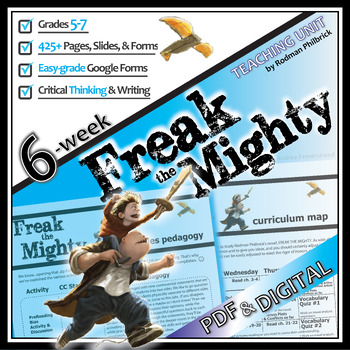
Their store is stocked with some awesome novel units! If I taught Middle School, the first one I'd buy is their Freak the Mighty Unit. The story by Rodman Philbrick is one of my all-time favorites.  I'd love to use Jonathan and Lisa's packet introduce it to a new generation.

Visit their blog to read about their story. They are a wonderful couple, generous with their advice and so friendly.  I know you'll be as impressed as I was.


Rockin Resources
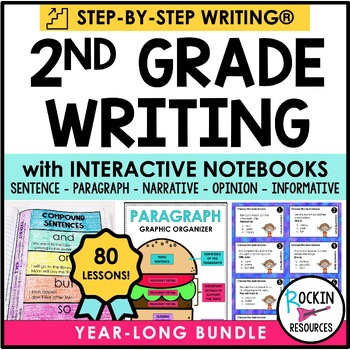
This wonderful lady is a writing guru!  Visit her blog for some amazing tips on teaching writing. You can get a taste for her expertise when you download her freebie, Graphic Organizers for Common Core Writing.  This is a great product.  I can see using with my second graders and it would be so helpful in the upper elementary grades.

I also just added her Interactive Writing Notebook Grade 2 to my wish list.  I can see building my
writers workshop around this product next year.


Emily has some great ideas on her blog and you don't have to be a speech teacher to use them.  I love her post about sequencing Jan Brett's The Mitten. The activities she chose to do with each of her groups reflected the differentiation that is needed to reach all learners. 

I just downloaded her freebie, Who Am I? A guessing game with WHO questions. This will be a great activity for my ESL learners. I love the way it teaches vocabulary, questioning, and using complete sentences.

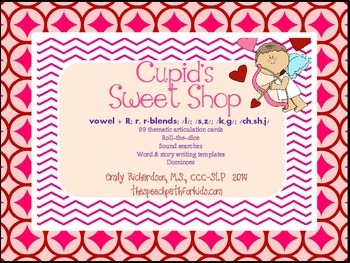
My struggling readers would benefit from her Cupid's Sweet Shop: Articulation activities. This is a cute and useful Valentine's Day product. 


I had such a good time meeting these fellow TPT sellers.  I hope you'll enjoy exploring their blogs and stores.  

Until next time,

Wednesday, January 14, 2015

My Favorite Things

Hi, Everyone!

I'm trying very hard to keep my New Year's Resolution and blog more often.  Now that I'm back at work, it's hard to find the time.  We're working on our mid-year assessments right now and of course, all of the other mid-year stuff:  Personalized Education Plans, parent conferences, intervention meetings, and my Professional Development Plan (due on Friday...sigh...).


I just came across this fun Linky Party hosted by Teaching Trio, so I decided to share a few of my favorite things about teaching reading. As many of you know, I teach second grade this year and most of my career I've taught first or second.  I taught Reading Recovery for one year, as well. So teaching kids to read is kinda my thing.


1)  I love reading aloud.  Today, I began reading Because of Winn-Dixie by Kate DiCamillo. This is one of my favorite chapter book read-alouds.  It's such a heartwarming story with so many great conversation starters. While I was reading it, my normally wiggly, talkative second graders were totally engaged.  I asked them what they thought about the beginning and then, half-jokingly said, "I'm sorry, but there are no pictures in this one."  Several voices hastened to reassure me that it was okay - they could make pictures in their minds.  How's that for a visualization lesson!


2)  I just love to listen to the kids who love to read aloud.  You know which ones I mean.  The dramatic ones, the ones who read like they have an audience even when they are reading to themselves.  When I teach fluency, they take every tip to heart.  I can usually hear them giving it a try during reading time. The one drawback: I'm always having to remind them to whisper-read!


3)  One of the great things about teaching in the primary grades is the amount of progress these kids make in a very short amount of time.  When I think about my poor babies who had limited concepts of print, letter identification, or sight word knowledge at the beginning of first grade, but left me with the ability to read at a level 16, 18, 20...Wow!  This year, I am so pleased with my kids' fluency scores.  All but three made the benchmark and only one was well below expected growth. And those three have all made progress since the beginning of the year. Watching these kids become readers is one of the joys that keeps me in this profession.  I love knowing that I had a part in their progress.

So, there you have it: my favorite things about teaching reading.  What are yours?

Friday, January 2, 2015

100 Acts of Kindness Challenge

Last year, I had a very challenging first grade class.  Many of them had behavior difficulties and on the whole, we had difficulty bonding as a class.  Classroom management was a challenge and throughout the year, I had to dip into my bag of tricks multiple times. One of my more successful activities involved my Hearts Full of Kindness.

I introduced the activity by discussing Acts of Kindness. We made an anchor chart on which we listed ways we had shown or others had shown kindness.  The students came up with several good ideas including:

  • inviting someone to play at recess
  • helping someone who had been hurt
  • sharing supplies
  • giving someone a gift
  • letting someone "cut" in line
  • helping someone to pick up their pencil box after it fell
I posted our list in our classroom and then presented a challenge to the class.  We had a little over a month until Valentine's Day.  I told them that I wanted to see if we could perform 100 Acts of Kindness by February 14th. The students were really excited about it and the project took off!

I copied several Kindness Heart cards on cardstock and cut them apart. First, I modeled how to fill out the cards. Then, I placed them in a basket on the back counter so students would have easy access.  I encouraged the students to fill out the cards during morning work time or after finishing an assignment.  

Here's one of the cards we collected in the first week. It says,
"Jose showed kindness when he help(ed) me carr(y) my backpack."
This is what our display looked like after a few days. 
We placed the cards on our wall display in rows of 10 for easy counting - and a math connection! During calendar time, we would count the cards and then figure out how many more we needed to get to 100. We didn't quite make our goal of 100 by Valentine's Day, but I did see an increase in acts of kindness.  Students became more aware of their own behavior, as well as that of their classmates.  So, I counted that as a win. I kept the project going until Spring Break.  

This year, I am going to introduce the Acts of Kindness project by reading a poem. You may have already noticed that I'm a poetry fan! :)


We'll use the poem to revisit our Bucket-filling discussions.  We'll also make an anchor chart listing acts of kindness.  Then I'll introduce the 100 Acts of Kindness challenge.  This year, I'll also let students know that if they meet the goal, we'll have a "Kindness Celebration" on Valentine's Day.  I want to make sure we reach our goal this year! (I have a much better group this year, but I want to keep that sense of community growing for the rest of the year.) I'll keep you posted and let you know how it's going. 

If you'd like to take part in the 100 Acts of Kindness Challenge, you can download my Hearts Full of Kindness packet HERE. It includes the poem, the kindness cards, 4 kindness bookmarks, and suggestions for implementation.

Let me know how it goes by posting your comments below.

Until next time,